
 Back to services
Architectural Supervision

Author's supervision (avtorskyi nahliad) is the Ukrainian statutory form of architectural supervision: the author of the project checks that construction works match the approved design documentation. Throughout construction, reconstruction, restoration, major repair or technical re-equipment, it is carried out by the architect who authored the project, other members of the team that prepared the approved design, or persons they authorise. The Law of Ukraine “On Architectural Activity” provides that both author's and technical supervision are carried out during the construction of a building or structure. The rules for author's supervision are set out in the Procedure for Author's Supervision during the Construction of an Architectural Object, approved by Cabinet of Ministers Resolution No. 903 of 11 July 2007.
AIMM carries out architectural (author's) supervision on buildings designed by the firm. On site, the supervising architects and engineers, the people who developed the design, make sure the spatial logic, proportions and quality of details survive construction. They respond to deviations before subsequent works cover them up. Supervision keeps errors from piling up, especially in complex reconstruction and restoration projects.
Is author's supervision mandatory
Yes, where construction follows a design: Article 11 of the Law “On Architectural Activity” provides for author's supervision. DSTU-N B A.2.2-11:2014, the national guidance on author's supervision, specifies that it is carried out regardless of the building's consequence class, complexity category or the client's form of ownership.
For buildings of consequence classes CC2 and CC3, copies of the documents appointing the persons who will carry out author's supervision are attached to the application for a permit to carry out construction works. Where a CC1 building is constructed to a design, these persons are named in the notice of commencement of construction works. If they change, the client notifies the state architectural and construction control authority (Articles 36 and 37 of the Law “On Regulation of Urban Development Activity”).
A client that is a legal entity or sole proprietor and fails to ensure mandatory author's supervision is liable to a fine of 50 times the subsistence minimum for able-bodied persons. Failing to report, or reporting late, a change of the persons responsible for supervision carries a fine of 20 times the subsistence minimum (Article 2 of the Law “On Liability for Offences in Urban Development Activity”).
Who carries out author's supervision during construction
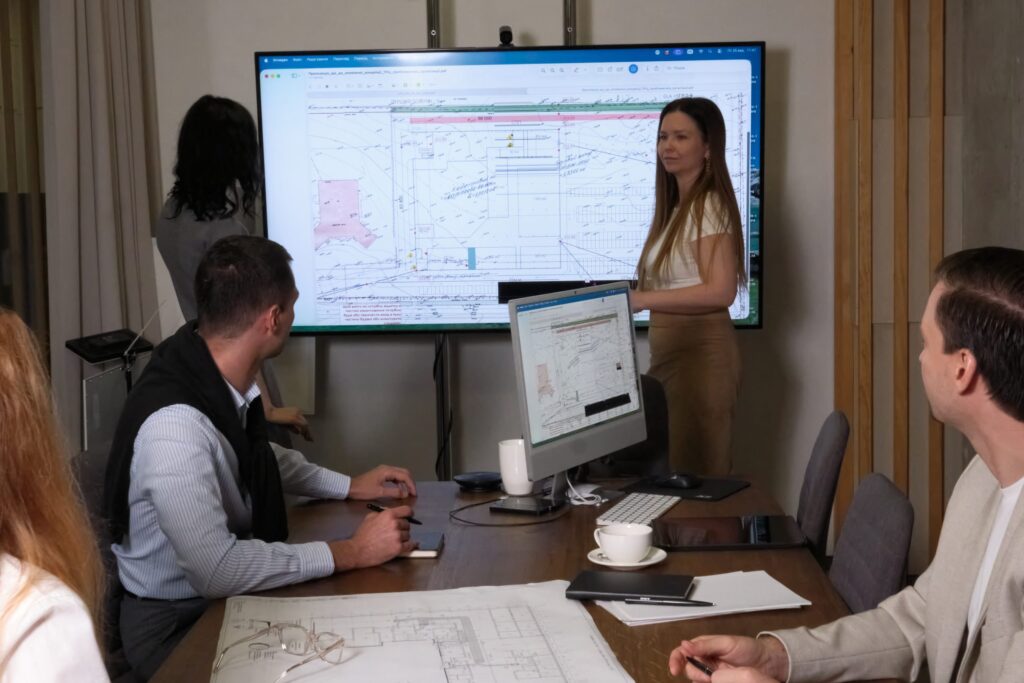
The Procedure groups the author of the project, other members of the design team and persons they authorise under one term — the general designer. The general designer signs the contract with the client and, for the whole construction period, sets up an author's supervision team from among the design team or authorised persons. It normally includes the author of the project and the specialists who designed the architecture, structure and building services. As a rule, the team is headed by the chief project architect or chief project engineer under whose direction the design was prepared.
The general designer approves the team. DSTU-N B A.2.2-11:2014 recommends formalising the decision to set it up with an internal order (a recommended form is given in Annex B), and the details of the team's composition are sent to the client. Representatives of design firms that did not take part in the design may also be brought in to supervise certain types of construction work (clause 3 of the Procedure).
What author's supervision includes
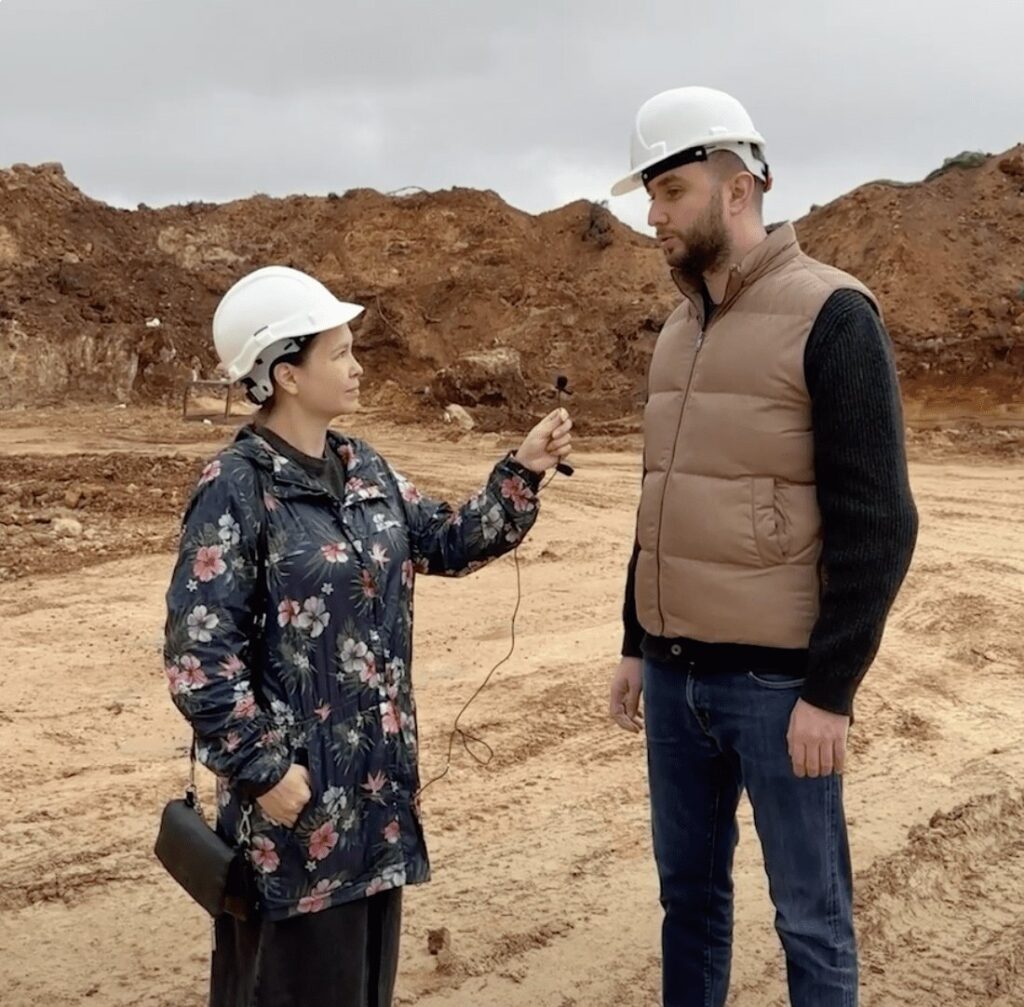
The scope of work is set out in the contract and in the technical brief for author's supervision. Typically the team:
- visits the site according to the schedule or at the client's request when the progress of works calls for it;
- checks that completed works follow the design decisions, including the structural elements, products, materials and equipment used;
- records deviations in the supervision log together with proposals on how to correct them, then checks that the contractor has corrected them;
- prohibits the use of structural elements, products and materials that do not comply with the design and building codes;
- takes part in the acceptance of the structural elements specified in the design documentation and of the concealed works and elements listed in the contract with the client;
- where needed, initiates changes to design decisions to bring them into line with codes that came into force after the design was approved (such changes are made with the client's consent);
- advises the client to commission additional testing of structural elements, products and materials whose quality is in doubt;
- at the end of construction makes a final log entry confirming that comments have been resolved and the works follow the design, and where needed takes part in preparing the declaration of readiness for operation or the act of readiness.
If the construction documentation is produced by another firm, the general designer also supervises its preparation. It does so under the design contract (Article 8 of the Law “On Architectural Activity”, clause 3 of the Procedure). For more on this stage, see the construction documentation page.
Author's supervision log
The author's supervision log is the document in which the team records the results of every site visit. The recommended form (Annex V to DSTU-N B A.2.2-11:2014) contains a list of contractors, the team composition, a register of visits and record sheets. Each entry gives the date, deviations from the design documentation, recommendations and deadlines for correcting them, the team member's signature, and the contractor's and client's acknowledgement that they have read it. The form can be adapted to the specifics of the project. The main rules:
- the general designer prepares the log in duplicate: one copy is kept by the client, the other by the designer;
- the pages are numbered, the log is bound, signed by the client and the designer and stamped where seals are used;
- the client hands its copy to the team on request so that entries can be made;
- an entry is made after every site visit, even when there are no comments;
- a team member has the contractor's responsible representative sign to acknowledge the comments, and that representative records in the log how they have been resolved;
- a log entry does not change the design: changes are made to the design documentation and only with the author's consent (Article 7 of the Law “On Architectural Activity”), and the log merely records them;
- the log can cover the whole site, or individual buildings, structures or separately commissioned sections;
- after the building is put into operation, the designer keeps its copy in the archive.
What to do if the contractor does not correct deviations
If the contractor refuses to correct a deviation from the design, the designer notifies the client and the state architectural and construction control authority in writing so that they can take action under the law (Article 11 of the Law “On Architectural Activity”, clauses 6 and 8 of the Procedure). This is why log entries carry weight: they show that the deviation was identified and recorded in good time.
How author's supervision differs from technical supervision
Technical supervision is control, arranged by the client throughout construction, over compliance with the design decisions and building codes and over the quality and quantity of work. Both run in parallel, but they control different things:
- Who arranges it. The client, for both. The client contracts the general designer for author's supervision, and carries out technical supervision in-house or entrusts it to a specialised firm, a technical supervision specialist or a consulting engineer.
- Who performs it. Author's supervision — the author of the project, other members of the design team or persons they authorise. Technical supervision — specialists holding a qualification certificate.
- What it checks. Author's supervision — primarily compliance of the works with the design decisions. Technical supervision — also compliance with building codes and standards, the quality and quantity of work and the quality documents for materials and products. It also keeps records of work accepted and paid for, and draws up reports on defective work.
- Independence. On a CC2 or CC3 building, technical supervision may not be carried out by staff of design or construction firms working on that site. So on its own project of that class the designer carries out author's supervision only.
One does not replace the other: technical supervision controls the quality and quantity of work, author's supervision checks that the finished building matches the design. The duty to ensure that the building is built to the construction documentation lies with the client and the contractor (Article 27 of the Law “On Architectural Activity”).
How the cost of author's supervision is calculated
There is no standard rate: the cost is calculated for each project and set out in the contract. DSTU-N B A.2.2-11:2014 recommends attaching a cost estimate and a schedule of supervision works that gives the timing and cost of each stage (form in Annex A).
For buildings constructed with public funds (budget funds, funds of state and municipal enterprises, state-guaranteed loans), the cost of author's supervision is included in the consolidated cost estimate of the construction project. It is calculated from the schedule of site visits agreed with the client, the number of specialists, the time they spend on site and the cost of one person-day (the national guidance on determining construction cost, approved by Order No. 281 of 1 November 2021 of the Ministry for Development of Communities and Territories). For other projects it is calculated this way if the contract says so. The amount depends on:
- the duration of construction and the number of phases, and with them the number of scheduled visits and unscheduled call-outs;
- the team composition: an architect only, or also a structural engineer and building services engineers;
- the scale and complexity of the project, and the number of buildings and separately commissioned sections;
- the list of structural elements and concealed works the team takes part in accepting;
- the distance to the site.
Regulatory framework
Author's supervision is governed by (as in force in October 2026):
- the Law of Ukraine “On Architectural Activity” — Articles 7, 8, 9, 11 and 27;
- Cabinet of Ministers Resolution No. 903 of 11 July 2007 “On Author's and Technical Supervision during the Construction of an Architectural Object”, which approved the Procedure for Author's Supervision and the Procedure for Technical Supervision;
- DSTU-N B A.2.2-11:2014 “Guidance on Author's Supervision of Construction” — in force since 1 July 2015, replacing DBN A.2.2-4-2003;
- the Law of Ukraine “On Regulation of Urban Development Activity” — Articles 36, 37 and 39;
- the Law of Ukraine “On Liability for Offences in Urban Development Activity” — Article 2;
- the national guidance on determining construction cost (Order No. 281 of 1 November 2021) — for publicly funded buildings.
Related services
Supervision records deviations from the design. When technologies, materials, equipment or the budget change during construction and design decisions need to be adapted, the firm provides architectural support — its own service format, not a term used in the Procedure. How the two services combine is described on the architectural supervision and support page. On projects outside Ukraine, the architect's role during construction is governed by local regulations and the contract. The firm's portfolio is in the projects section.
Frequently asked questions
Usually not. The client pays for supervision under a separate contract, even when the same firm designs the building and supervises it. The scope of supervision depends on how construction goes, so its cost is calculated separately, based on the schedule.
The document that governs the relationship between the general designer and the client: their rights and obligations, the scope and duration of supervision, the price and payment terms. If supervision has to be extended beyond the contract term or its scope changes, DSTU-N B A.2.2-11:2014 recommends formalising this with a supplementary agreement.
The codes do not set a fixed number of visits: they are planned in the schedule around the stages of work, and unscheduled visits are made at the client’s request. If construction lasts more than a year, the schedule is adjusted as needed to the volume of work planned for the current year.
Neither the Procedure for Author’s Supervision nor DSTU-N B A.2.2-11:2014 gives the team that right. The team records deviations in the log and prohibits the use of structural elements and materials that do not comply with the design. If the contractor refuses to correct the deviations, the team notifies the client and the state architectural and construction control authority in writing. It is technical supervision that may require the contractor to stop work (clause 6 of the Procedure for Technical Supervision), for example until concealed works have been inspected and signed off.
It starts with the construction works: the client should notify the designer in writing when they begin. It ends when the building is put into operation. CC1 buildings are accepted on the client’s declaration of readiness; for CC2 and CC3 buildings the act of readiness for operation is signed by, among others, the general designer (Article 39 of the Law “On Regulation of Urban Development Activity”). Article 9 of the Law “On Architectural Activity” provides that the author of the project, or a person they authorise, takes part in putting the building into operation and signs the relevant act. Without that signature, the act is invalid.
request